Ever wondered how a single piece of paper can open doors to the world’s most prestigious boardrooms?
When it comes to job hunting, the Harvard resume template is more than just a layout; it’s the gold standard of professional storytelling.
Using this Ivy League approach ensures that your credentials attract attention with clarity and authority, regardless of your level of experience as an executive or recent graduate.
We’ll go into more detail in this guide about why recruiters still like Harvard-style resumes and how you can use these templates to advance your own professional path.
30 Second Snippet: Harvard Resume Templates
Mastering the Harvard resume template provides 2026 applicants with a gold-standard framework for career success. This guide explores Harvard-style layouts for undergraduates and professionals, emphasizing the “anatomy” of powerful bullet points and high-impact action verbs tailored for finance and tech.
We offer the strategic tools and 2026 checklists required for a memorable application, from negotiating the CV vs. resume decision to avoiding contemporary AI censors.
Why the Harvard Resume Remains the Industry Standard?
The Harvard resume is more than just a document; it is a strategic branding tool built on the philosophy of the “one-page” standard. This minimalist approach forces candidates to tailor their most impressive achievements, ensuring that every bullet point serves a specific purpose.
Recruiters at top-tier firms in the sector of Finance (MBB), Technology (FAANG), and Consulting prefer this format because it allows for rapid scanning. In 2026, the evolution of the resume and cover letter has been heavily influenced by AI-driven Applicant Tracking Systems (ATS). The Harvard style’s clean layout and use of high-impact action verbs make it inherently ATS-friendly, allowing software to easily parse your skills and experience.
Choosing Your Harvard Resume Templates by Academic Level
Selecting the right template is the first step toward a successful application. Your choice should reflect your current career stage while maintaining the classic Harvard University aesthetic.
The Harvard College Undergraduate Template
For current students, the resume template focuses heavily on the “Education” section. Since professional experience might be limited, this version emphasizes:
- Academic honors, relevant coursework, and GPA.
- Leadership roles in campus organizations.
- Summer internships and volunteer work.
- The use of a precise bullet point structure to demonstrate transferable skills through action verbs.
Harvard Extension School: Professional Resume and CV Options
The Harvard Extension School provides a bridge between academic theory and professional practice. For these students, the resume often needs to accommodate a career pivot or significant work history.
- When to use a Resume: Stick to a one-page resume template for most corporate roles in the private sector.
- When to use a CV: Transition to a multi-page CV if you are applying for roles in academia, research, or international positions where a more exhaustive history is required.
- The Hybrid Approach: In 2026, many professionals tailor their resume and cover letter by highlighting specialised certifications alongside their degree to show continuous learning.
Harvard Resume Sample
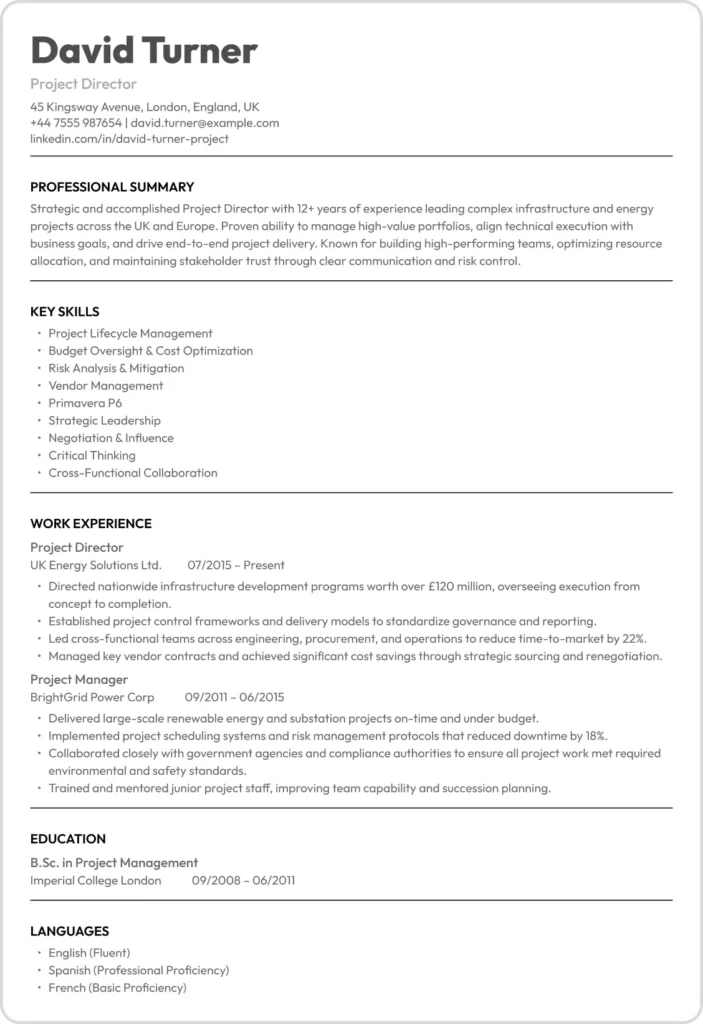
The Harvard resume is a gold standard for professional applications, emphasizing a clean, minimalist layout that prioritizes readability. This one-page resume format utilizes a reverse chronological order, making it suitable for both students and seasoned experts. Key features include an education-first structure, followed by experience described using powerful action verbs. Rather than simply listing duties, the Harvard style encourages focusing on quantifiable achievements to demonstrate tangible value.
Ensure your contact details are clear and your professional summary remains concise. The template relies on standard margins and classic fonts to maintain a polished, professional aesthetic. By adopting this impact-driven framework, you ensure your credentials are optimized for both recruiters and applicant tracking systems (ATS). This structured approach highlights your most relevant skills while maintaining a sophisticated, traditional look that commands attention in any competitive industry.
How to Create a Perfect Harvard-Style Document?
Building a document that commands respect requires attention to detail and a commitment to a specific aesthetic. When you use a Harvard resume template, you are adopting a format that has been refined over decades to prioritize clarity and impact. In 2026, while digital tools have evolved, the core principles of the Harvard university style remain the benchmark for professional excellence.
Establishing the Correct Format and Layout
The “look and feel” of your resume is your first impression. To align with Harvard standards, your document should follow these specific guidelines:
- Margins & Font: Maintain 1-inch margins on all sides. Use classic fonts like Garamond or Times New Roman, sized between 10pt and 12pt.
- Consistency: Ensure that dates are right-aligned and headers are bolded consistently throughout the template.
- Length: For most applicants in the private sector, a one-page format is non-negotiable. If you are moving into research, you may transition this into a multi-page CV.
Powering Your Experience with Strong Action Verbs
A common mistake is using passive language like “responsible for” or “assisted with.” To tailor your resume template for high-level roles, every sentence should begin with dynamic action verbs.
These words immediately signal your level of authority and the type of contribution you made. For example, in the tech sector, you might use “Developed” or “Optimised,” while in a leadership role, “Spearheaded” or “Orchestrated” carries more weight. In 2026, hiring managers look for these “power words” to quickly identify candidates who take initiative.
The Anatomy of a Successful Bullet Point
Each bullet point in your Harvard resume should be a mini-story of achievement. The goal is to move beyond a simple list of duties and focus on results. A perfect bullet point follows the “Action + Context + Result” formula:
- Action: Start with one of your chosen action verbs.
- Context: Describe the project, tool, or situation.
- Result: Quantify the outcome (e.g., “Increased efficiency by 15%”).
Applying this degree of specificity guarantees that your cover letter and resume present a coherent tale of your professional worth. This format guarantees that your most essential talents are not overlooked, whether you are sending a CV for a corporate position or an academic one.
Academic vs. Professional: CV Template and CV Example Analysis
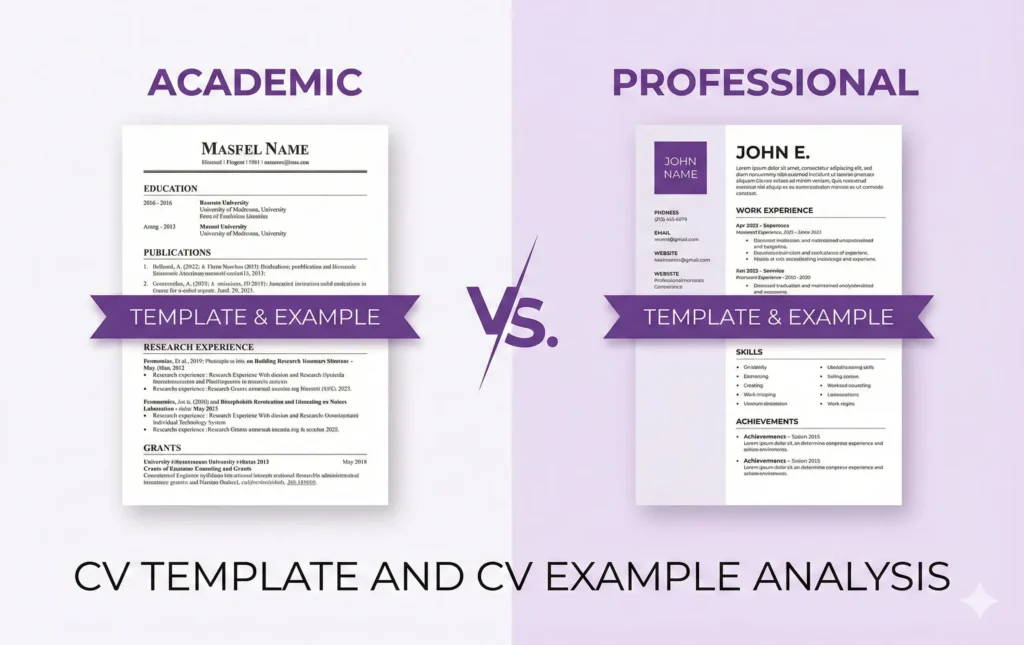
In the academic and international job markets of 2026, the distinction between a resume and a CV is a critical nuance. While a resume template is typically a concise one-page summary for the private sector, a Harvard-style CV (Curriculum Vitae) allows for a more expansive history of your scholarly and professional life.
When to Choose a CV over a Resume?
The decision to use a CV template depends largely on the sector and the geography of the role.
- Academic and Research Roles: If you are applying for a PhD program, a fellowship, or a teaching position at Harvard University, a CV is required to list every publication, presentation, and grant.
- International Applications: In many regions outside the U.S., the term “CV” is used interchangeably with resume, but the format often remains more detailed.
- Length Flexibility: Unlike the strict one-page rule of the Harvard resume, a CV can extend to multiple pages to accommodate a lifetime of academic achievement.
Reviewing Harvard CV Examples for Graduate Students
When you examine a high-quality cv example, you will notice that the hierarchy of information shifts to prioritize intellectual contributions. A successful CV for 2026 should be structured as follows:
- Education: Detailed listing of degrees, including thesis titles and advisors.
- Research Experience: Utilizing a structured bullet point approach to describe methodologies and findings.
- Publications & Presentations: Categorized by peer-reviewed journals, book chapters, and conference papers.
- Awards & Fellowships: Highlighting prestigious recognitions.
You can make sure that your academic narrative is not crammed into a professional framework that wasn’t intended for it by employing a specific CV template.
Don’t forget to customise every entry with particular action verbs that demonstrate academic rigour, like “Investigated,” “Authored,” or “Collaborated.“
Whenever you are submitting a ten-page CV for a research grant or a résumé and cover letter for a corporate internship, the clean, minimalist style associated with Harvard is your best bet for success.
Strategic Resume Tips for 2026 Applicants
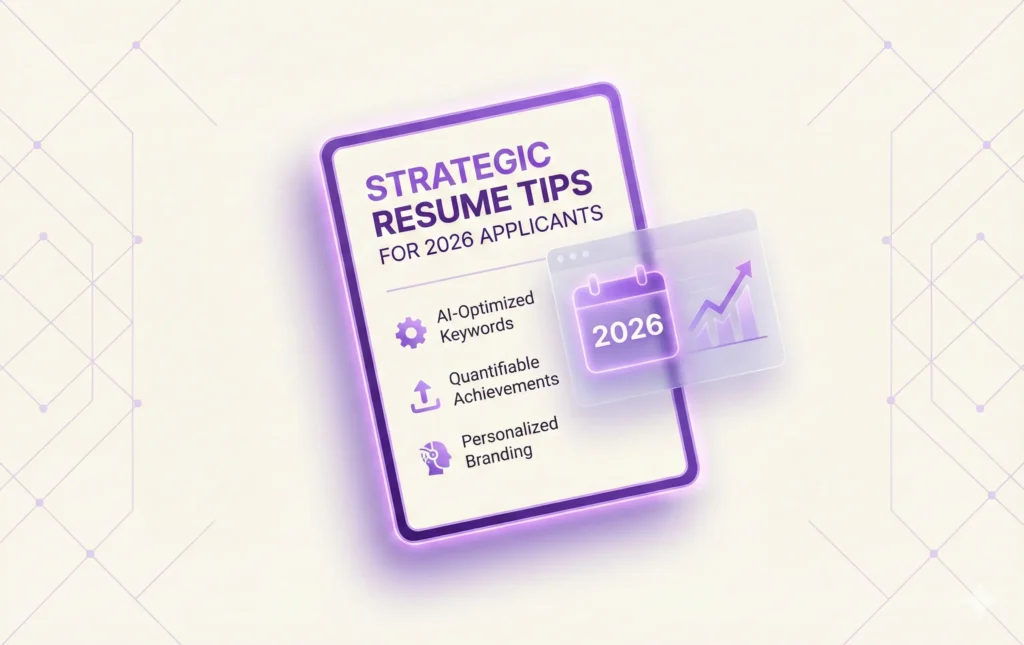
As the job market in 2026 shifts toward hyper-personalized, AI-vetted applications, simply having a clean format isn’t enough. You must actively tailor your Harvard resume template to meet the evolving expectations of both human recruiters and advanced algorithms.
Using MCS Hours to Get Tailored Career Guidance
For those affiliated with Harvard University, the Mignone Center for Career Success (MCS) is an invaluable resource. To ensure your resume and cover letter are competitive in your specific sector, you should leverage:
- Drop-In Hours: Currently, MCS hours for quick resume reviews and career questions are held Monday through Friday, typically from 1:00 PM to 4:00 PM.
- Specialized Clinics: Look for industry-specific workshops where advisors help you refine every bullet point to match the standards of high-finance or biotech firms.
- Virtual Support: For Harvard Extension students, dedicated virtual drop-in sessions are often scheduled on the first Monday of each month, providing global access to top-tier career coaching.
Complementing Your Application with a Sample Cover Letter
A strong resume template requires a matching narrative. Your sample cover letter should not simply repeat your resume; instead, it should connect the dots between your background and the company’s future needs.
- Formatting Unity: Use the same font, header, and margin format as your Harvard resume to create a cohesive professional “brand.”
- Narrative Flow: Use your cover letter to provide context for a specific bullet point that might need more explanation, such as a major career pivot or a complex research project.
- Direct Impact: Focus on how you will solve the employer’s problems. Avoid generic phrases and instead use the same high-impact action verbs found in your resume to demonstrate consistency.
2026 Trends: Beating the “AI Gatekeeper“
In 2026, over 95% of Fortune 500 companies use AI-enhanced Applicant Tracking Systems (ATS). To ensure your resume isn’t filtered out:
- Exact Keyword Matching: If a job description asks for “Cross-functional Leadership,” do not just write “Team Management.” Use the exact phrasing the ATS is programmed to find.
- Avoid Complex Graphics: While modern templates are tempting, the traditional Harvard single-column format remains the safest bet because it parses perfectly into any database without errors.
- Quantified Proof: Data from 2026 hiring reports shows that resumes with quantified results (using percentages or dollar amounts) are 40% more likely to pass the initial screening phase.
Related Resources and Final Checklist
To finalize your application, you must go beyond the basic format and ensure every detail is polished for the 2026 market. The following resources and checklist will help you transition from a draft to a submission-ready Harvard resume.
Essential Related Resources
- Mignone Center for Career Success (MCS): The primary hub for Harvard University students to download official template files in Word and Google Docs formats.
- Big Resume AI Feedback: A specialized platform for Harvard students to run an ATS scan on their resume template before submission.
- Crimson Careers: Use this portal to find job postings specifically looking for candidates with a Harvard-style academic background.
- Industry-Specific Guides: MCS offers niche guides for the tech sector, finance, and non-profits, providing tailored bullet point examples for each field.
The 2026 Harvard Resume Checklist
Before you hit “send,” run through this final list to ensure your resume and cover letter are flawless:
| Category | Requirement | Check |
| Formatting | Is it exactly one page? (Unless applying for a multi-page CV role). | ✅ |
| Tailor | Did you use keywords from the specific job description? | ✅ |
| Action Verbs | Does every bullet point start with a strong, active verb? | ✅ |
| Contact Info | Is your professional email and LinkedIn URL accurate? | ✅ |
| Quantification | Did you include at least 3-4 metrics or data-driven results? | ✅ |
| Consistency | Are your font sizes and date alignments uniform throughout? | ✅ |
| File Type | Is the document saved as a “Flat PDF” to ensure ATS readability? | ✅ |
By following this guide, you aren’t just filling out a template; you are building a strategic career asset. In 2026, the difference between an interview and a rejection often comes down to the clarity of your format and the strength of your action verbs.
50 High-Impact Action Verbs You Can Use in Your Harvard Resume
To help you tailor your Harvard resume template for the high-stakes 2026 job market, I have curated 50 high-impact action verbs. These are categorized by the specific sector and the type of achievement you want to highlight.
Using these verbs at the start of each bullet point will significantly improve your document’s performance in both human reviews and AI-driven ATS scans.
Sector: Finance & Quantitative Analysis
Sector: Technology & Software Engineering
Focus on creation, optimization, and scale.
Leadership & Strategic Impact (Applicable to Both)
Use these to show you can manage teams and drive a vision.
Common Queries Related to Harvard Resume Template
Where can I find a free download for a Harvard resume template?
Access a free download of the official Harvard template through the Mignone Center for Career Success or Harvard’s Crimson Careers portal.
How do I tailor my resume to pass Applicant Tracking Systems (ATS)?
To beat ATS, incorporate keywords gleaned from the job description to align your transferable skills with what the employer would value.
What is the main difference between a resume and a CV template?
A cv template highlights your academic achievements and research for academia and research, while a resume should reflect professional development for non-academic roles.
When should I visit the Mignone Center for Career Success for help?
Visit during MCS hours for resume and cover letter writing advice to highlight your unique skills or experiences to top-tier recruiters.
How can I increase my chances of being interviewed at Fortune 500 companies?
Use an impactful, ats-friendly Harvard-style format to differentiate you from other candidates and highlight your strongest assets and skills for entry-level positions.
Can I use generative AI to create a response-producing cover letter?
Yes, generative AI can quickly create a sample cover letter; however, you must tailor the letter to align with your career goals.
How should I customize my cover letter for a Harvard-style application?
Address your letter to the specific organization while highlighting experiences that are most applicable to the job description.
What should I emphasize when applying for academic or faculty positions?
Prioritize research and teaching for research-focused roles, while ensuring you also demonstrate essential leadership and soft skills.
Wishing You the Best!
Ultimately, choosing a Harvard resume template is about more than just following tradition; it’s about utilising a time-tested framework to tell your professional story with authority. The secret is striking a mix between clear layout and powerful action verbs when transversing 2026’s AI gatekeepers, regardless of your level of experience.
Don’t forget to run through our final checklist and pair your document with a tailored cover letter to stand out. You’ve got the tools and the templates; now it’s time to land that interview. Happy job hunting!