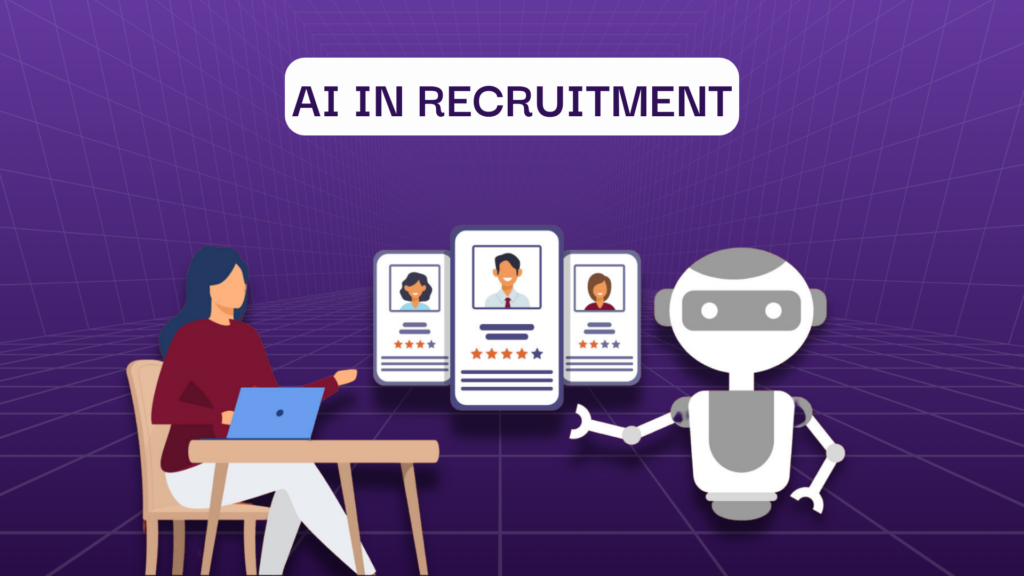
I never thought I’d see the day when a robot would read my resume before a human did, but here we are.
If you’ve been wondering how is AI changing the hiring process, the short answer is: dramatically. From AI-powered resume screeners to chatbots conducting first-round interviews, companies are leaning heavily into automation.
I’ve noticed job applications now feel less like sending letters into a void and more like navigating a digital gatekeeper. AI tools are scoring candidates on skills, cultural fit, and even communication style, often within seconds. It’s faster, sure, but it also raises real questions about bias and transparency.
One thing’s clear: the hiring game has permanently changed!
What Does “AI in Hiring” Actually Mean?
When people hear “AI in hiring,” many picture a robot sitting across a desk asking interview questions. The reality is far less dramatic, but equally important to understand.
AI in recruitment refers to software that automates decision-making at various stages of the hiring process. It scans your resume, ranks your application, and in some cases, even analyzes your video interview responses, all before a human recruiter ever looks at your profile. With thousands of applications flooding in for a single job posting, companies turned to AI to manage the volume without adding headcount.
Today, an estimated 75% of resumes are screened by AI before a human sees them. If the software doesn’t flag your application as a match, it simply moves on, no callback, no explanation.
How is AI Changing the Hiring Process? Stage by Stage
AI doesn’t just show up at one point in hiring. It is woven through every stage, from the moment a company writes a job description to the final decision on who gets the offer. Here is what that actually looks like.
Stage 1: Job Posting and Candidate Sourcing
It starts before you even hit “Apply.“
Companies are now using AI writing tools to help HR teams craft job descriptions. These tools suggest the right language, flag biased wording, and optimize listings to attract a wider range of candidates.
On the sourcing side, AI tools are actively scanning platforms like LinkedIn, GitHub, and various job boards to find candidates who match what the company is looking for. You might receive an InMail or a recruiter message without ever applying because an algorithm flagged your profile as a strong fit.
This also works the other way. When you search for jobs, algorithmic recommendation engines are matching your profile to open roles based on your skills, experience, and activity. The more complete and keyword-rich your profile is, the better your chances of being surfaced to the right employer.
What this means for you: Think of your LinkedIn profile and resume as always-on marketing tools. Keep them updated, specific, and aligned with the kind of roles you want.
Stage 2: Resume Screening (ATS and Beyond)
This is where most job seekers lose without even knowing it.
An Applicant Tracking System, or ATS, is software that companies use to collect, organize, and filter job applications. When you submit your resume online, it almost always goes through an ATS first, not a human.
Older ATS tools worked on simple keyword matching. If your resume had the right words, you passed. If it did not, you were out. Newer AI-powered screening goes further. It looks at context, relevance, career progression, and how well your overall profile fits the role, not just whether you used the right phrases.
Common reasons AI rejects a resume before a human ever reads it include unusual formatting, missing keywords from the job description, unexplained employment gaps, and submitting a generic resume that has not been tailored to the role.
Quick Tips: How to Write a Resume That Passes AI Screening
- Mirror the language from the job description naturally throughout your resume
- Use a clean, simple format with no tables, columns, or graphics
- Spell out acronyms at least once (for example, Search Engine Optimization or SEO)
- Quantify your achievements wherever possible
- Customize your resume for each application, even slightly
Stage 3: Candidate Assessments and Skills Testing
If your resume makes it through, the next stop is often some kind of assessment.
Companies use AI-powered tests to evaluate everything from technical skills and coding ability to cognitive reasoning and problem-solving speed. These are designed to measure actual capability rather than just what looks good on paper.
You may also come across game-based assessments. These look like simple online games but are built to measure things like attention span, decision-making patterns, and how you perform under pressure. What feels casual is actually structured data collection.
On top of that, some companies use personality and behavioral profiling tools to assess how you might work within a team or handle specific scenarios on the job.
What you should know going in: Read any instructions carefully before you start. These tests are often timed and adaptive, meaning they adjust in difficulty based on your responses. Treat them seriously even when they feel informal, because the AI is always tracking.
Stage 4: AI Video Interviews
This one tends to catch people off guard the most.
AI video interviews come in two forms. The first is asynchronous, where you record your answers to pre-set questions on your own time and an AI reviews the footage. The second involves real-time AI analysis during a live video call. In both cases, you are not just being evaluated on what you say.
The AI is analyzing your word choice, your tone of voice, your pacing, and in some tools, your facial expressions and eye contact. It is building a picture of your communication style and confidence level from signals you might not even think about.
Several platforms offer this kind of technology, and more companies are adding it to their hiring workflow every year.
How to prepare:
- Practice speaking clearly and at a steady pace
- Set up good lighting so your face is visible and well-lit
- Look directly at the camera, not at your own image on screen
- Answer naturally and avoid over-rehearsed, robotic responses
- Do a test recording beforehand to check your audio and background
Stage 5: AI-Assisted Decision Making
By the time you reach the final stages, AI has been quietly building a profile on you.
At this point, the system aggregates everything: your resume score, assessment results, video interview analysis, and any other data points collected along the way. It generates a ranking or suitability score and presents shortlisted candidates to the hiring team.
Human recruiters do still step in here, and their judgment matters at this stage. But the pool they are choosing from has already been filtered and ranked by AI, which means the software has had a significant influence on who even makes it to that conversation.
The challenge is what many call the “black box” problem. If you were rejected, you likely will not know at which stage it happened or why the AI scored you the way it did. There is very little transparency for candidates, and most companies do not offer detailed feedback. This is one of the more frustrating realities of AI powered hiring, and it is something regulators are beginning to pay attention to.
Why are Companies Using AI for Hiring?
The adoption comes down to four key drivers:
- Speed: AI can screen hundreds of resumes in the time it takes a recruiter to read one.
- Cost: Automating early-stage screening significantly reduces recruiting overhead.
- Consistency: Every application is evaluated against the same criteria, removing variability.
- Bias reduction: In theory, AI removes human gut-feel from screening. In practice, this promise is more complicated, which we’ll cover later.
AI Job Posting: Reaching the Right Talent
Creating the perfect job posting can be tricky. Too broad, and you get unqualified applicants; too narrow, and you miss out on potential talent. AI job posting tools analyze market trends, industry-specific keywords, and candidate behaviors to optimize postings for visibility.
This means companies attract the right people, while job seekers see opportunities better tailored to their skills. The result is a more efficient recruitment pipeline where both sides benefit.
The Future of Hiring and Recruitment
Recruitment in 2026 is about working smarter, not harder. With platforms like avua Smart Hire, employers can leverage AI-driven solutions to make better hiring decisions. These platforms combine the power of automation with human judgment, ensuring companies can hire smart and build stronger teams.
Unlike traditional systems, Smart Hire recruitment technology uses advanced analytics, predictive modeling, and candidate scoring to deliver accurate insights. For job seekers, it means that resumes are evaluated fairly and consistently, reducing bias in the hiring process.
AI Recruiting Tools and Platforms
The market is filled with various AI recruiting tools, but the most impactful are those that offer a complete solution. Whether it’s a recruitment AI software for candidate tracking, an AI based recruitment platform for end-to-end hiring, or the best AI recruiting tools that integrate seamlessly with existing HR systems, organizations now have multiple choices.
Some of the top benefits of these AI tools for recruitment include:
- Automated resume screening and ranking.
- Candidate skill matching with job requirements.
- Predictive analytics for long-term employee success.
- Enhanced diversity and inclusion tracking.
Driving Growth in Six Industries with avua Hire
At avua, innovation meets industry expertise. With avua Hire, businesses across six critical sectors, Energy, IT, Pharma, Construction, Finance, and Healthcare, gain access to a tailored AI-driven recruitment solution.
For example:
- In Energy, AI platforms help hire specialists for renewable projects.
- In IT, recruitment AI tools identify developers with cutting-edge skills.
- In Pharma, smart platforms ensure compliance-focused hiring.
- In Construction, AI improves workforce planning for complex projects.
- In Finance, AI recruiting software enhances risk-aware hiring.
- In Healthcare, AI ensures skilled professionals are matched to high-demand roles.
The Role of Resume Analysis in AI Hiring
AI isn’t just helping recruiters, it’s changing how job seekers prepare as well. Tools like a CV analysis tool and resume scoring systems give candidates immediate feedback on how their applications perform against job postings. Instead of guessing what employers want, applicants can refine their resumes to improve visibility and increase interview chances.
This means that in the AI hiring era, job seekers who leverage resume feedback gain a real advantage.
Also Read: What Role Does AI Play in Construction Workforce Hiring?
Why AI-Based Hiring Platforms are the Future?
Companies that use an AI based hiring platform can scale their recruitment processes while maintaining accuracy and fairness. With AI software recruiting, businesses can track applications, assess candidates, and even conduct structured video interviews, all in one system.
The top AI recruiting tools also provide advanced analytics, enabling organizations to identify hiring bottlenecks and improve processes. By 2026, these innovations have made hiring faster, smarter, and more inclusive.
Common Queries Related to AI Changing the Hiring Process
What are AI hiring tools, and how do they work?
AI hiring tools are platforms that automate recruitment tasks like resume screening, job posting optimization, and candidate scoring to make hiring faster and more effective.
How does AI job posting help employers?
AI job posting software analyzes market data and keywords to create job descriptions that attract the right candidates, saving time and improving match rates.
What makes avua Smart Hire unique?
avua Smart Hire combines AI automation with industry-specific insights across Energy, IT, Pharma, Construction, Finance, and Healthcare, ensuring smarter recruitment outcomes.
Can AI tools for recruitment eliminate hiring bias?
While AI can reduce certain biases by focusing on skills and data, the best results come when combined with human oversight.
How does a CV analysis tool help job seekers?
A CV analysis tool provides resume feedback and scoring, helping candidates refine their applications to stand out in AI-driven hiring processes.
Adapt, Prepare, and Use AI to Your Advantage
AI powered hiring is not something that is coming soon. It is already here, and it is running in the background of almost every job application you submit today.
But knowing that actually gives you an edge. Most job seekers are still applying the same way they did five years ago, completely unaware of how much the process has changed. You are not one of them anymore.
Clean up your resume. Fill out your LinkedIn profile properly. Take those assessments seriously. Practice for video interviews like they actually matter, because they do.
The hiring process has evolved, and the candidates who take the time to understand it are the ones who stop wondering why they never hear back and start getting actual callbacks.
That is really what this all comes down to.