Hiring urgency is a symptom. When an organization is scrambling to fill a role, running simultaneous sourcing campaigns, and eventually settling for good enough rather than genuinely right, the cause is almost never the current moment. It is the absence of something that should have been built before the urgency arrived.
That something is a candidate pipeline.
A candidate pipeline is the organized collection of active candidates at various stages of identification, engagement, and assessment, representing the organization’s running inventory of qualified talent at any given point in time. It is both a process and an asset: the structured flow of candidates through recruitment stages and the accumulated relationships that reduce the cost of future hiring.
Organizations with mature pipelines built on consistent candidate nurturing and strong candidate engagement fill roles faster, at lower cost, and with better outcomes. AI hiring platforms have made building and maintaining those pipelines more efficient than any manual active sourcing process could previously achieve.
The core metric governing pipeline health is the Pipeline Yield Rate (PYR): the proportion of candidates entering the pipeline who ultimately result in a hire, either for the current role they entered through or for a future role they are subsequently matched to.
Pipeline Yield Rate (%) = (Hires from Pipeline / Total Candidates Entering Pipeline) x 100
A PYR below 3% signals quality problems: too many unqualified candidates entering, too much friction causing drop-off, or insufficient nurturing between hiring cycles. Above 8% indicates a well-maintained pipeline converting efficiently. Best-in-class organizations with mature AI-optimized pipelines achieve PYRs of 12 to 18%.
What is Candidate Pipeline?
A candidate pipeline is a structured inventory of candidates at different stages of relationship and evaluation, organized to provide the hiring organization with a continuously refreshed supply of qualified talent for current and anticipated roles, enabling faster and more cost-efficient hiring than cold-start sourcing approaches can deliver.
The term is used in two related but distinct senses that are worth separating. In the narrow sense, a candidate pipeline refers to the active funnel of candidates currently being evaluated for a specific open role: the candidates at the sourcing stage, the candidates who have been screened, the candidates in interview rounds, and the candidates at the offer stage. This is the operational pipeline for a single role.
In the broader sense, a candidate pipeline refers to the full talent inventory the organization maintains across all roles, all stages, and all time horizons: the active role pipelines plus the nurtured former candidates, the sourced passive candidates not yet in an active process, the silver medalists from prior hiring cycles, and the talent community members who have expressed interest in the organization but for whom no suitable current role exists. This broader pipeline is the strategic asset that enables proactive hiring rather than reactive scrambling.
Is Your Pipeline a Living Asset or a Static List?
Most organizations have something that could be called a candidate pipeline. They have an ATS with candidate records, they have prior application data, they have a list of candidates who were contacted in the last hiring cycle. The question is whether this data functions as a living pipeline that generates hiring efficiency or as a static list that grows without producing value.
The distinction between a living pipeline and a static list is whether the candidates in it are being maintained. A living pipeline has candidates who receive regular communication from the organization, whose current circumstances are periodically updated, and who are matched against new roles as they open.
A static list has candidate records that were created during a prior sourcing effort and have received no attention since. The static list grows with every hiring cycle but does not become more valuable because the data in it is aging, the contacts are going cold, and the candidates are making career decisions without any input from the organization that has their information.
Organizations with actively maintained candidate pipelines fill roles an average of 23 days faster than those relying on cold-start sourcing, and report cost-per-hire figures that are 38% lower for roles filled from pipeline versus roles requiring fresh external sourcing. The speed advantage is particularly significant for critical roles where vacancy cost is high: a senior engineering role with a daily vacancy cost of $1,200 filled 23 days faster represents $27,600 in direct value from pipeline readiness for a single hire.
For TA leaders, the pipeline management question is not whether to build a pipeline but what level of investment in pipeline maintenance is justified by the expected return. The answer depends on the organization’s hiring volume, the typical time-to-fill for the roles being recruited, and the degree to which the competitive market for talent is making cold-start sourcing expensive and slow. In most professional hiring contexts in 2026, the ROI on active pipeline management is positive by a significant margin: the investment in maintaining candidate relationships between hiring cycles is consistently less than the cost differential between pipeline-sourced and externally sourced hires.
The scenario that makes this tangible: a technology company opens a machine learning engineer role. Their strategic pipeline includes 34 machine learning candidates from prior cycles: 12 silver medalists who were not hired due to role-fit specifics, 14 passively sourced candidates who expressed interest in prior outreach but for whom no role was immediately suitable, and 8 candidates from prior nurturing program responses.
A pipeline activation message sent to all 34 on the day the role opens produces 11 positive responses within 48 hours. Seven enter the active process. Three reach final stages. Two receive offers. Both accept. Total sourcing time: 11 days from role opening to offer acceptance. Total sourcing cost: approximately $2,400 in recruiter time and communication costs.
The equivalent outcome through cold-start external sourcing for this role in the current market: 31 days average and $14,200 in sourcing cost. The pipeline delivered the same quality outcome in one-third the time at one-sixth the cost, from an asset that cost the organization approximately $800 per year to maintain.
Your Resume Isn’t Getting Read
Let’s Get That Fixed!
75% of resumes get auto-rejected. avua’s AI Resume Builder optimizes formatting, keywords, and scoring in under 3 minutes, so you land in the “yes” pile.
The Structure of a Healthy Candidate Pipeline
A well-structured candidate pipeline has distinct layers that reflect different candidate relationship states and different time horizons for potential hiring. Managing each layer effectively requires different practices and produces different types of value.
Active Role Pipeline
The candidates currently in evaluation for a specific open role. This layer is the operational core of the pipeline and the one most directly visible in ATS pipeline stage reports. Candidates in the active pipeline are at defined stages (sourced, screened, interviewed, assessed, offered) and are being progressed according to the hiring process design for the role. The quality of the active pipeline determines whether the current hiring need is met efficiently and with appropriate quality.
The active pipeline is temporary by nature: it converts into hires and rejections within the timeframe of the active search. What the organization does with the candidates who do not convert into hires, specifically whether they are maintained in the broader pipeline or allowed to leave the organization’s awareness, determines whether the investment in the active pipeline produces any lasting value beyond the current hire.
Silver Medalist Pool
The former finalists who were not selected for a prior role but who demonstrated strong capability and organizational fit. This is the highest-priority segment of the strategic pipeline because the investment in qualification has already been made. Silver medalists have been screened, assessed, and evaluated; the organization has a documented, evidence-based view of their capabilities. When a subsequent role opens for which they are a strong match, the entire sourcing and initial assessment phase can be bypassed, reducing time-to-shortlist dramatically.
Maintaining a well-organized silver medalist pool requires tagging former candidates with the specific competencies demonstrated, the roles they were assessed for, the reasons for non-selection (role-fit specifics, timing, headcount constraints), and the quality assessment scores from their prior process. This structured data is what enables rapid identification of relevant silver medalists when a new role opens, rather than requiring a recruiter to remember from memory which prior candidates might be suitable.
Passive Candidate Pool
Professionals who have been identified as qualified for relevant roles through proactive sourcing but who have not yet applied or entered an active process. This segment requires nurturing to maintain engagement and awareness over what may be a multi-month or multi-year window before the right opportunity and the right candidate circumstances align.
The passive candidate pool is the largest and most variable segment of the strategic pipeline. It includes professionals at every stage of receptivity: those who are currently exploring options and would be immediately responsive to a direct role opportunity, those who are settled in their current role and require sustained relationship development before they would consider a move, and those who are genuinely passive and need a sufficiently compelling opportunity to create interest where none currently exists.
Talent Community Members
Candidates who have opted into an ongoing relationship with the organization through a talent community, alumni network, or nurturing subscription without being in an active hiring process. These are self-selected engagers whose demonstrated interest in the organization is a positive indicator, though their qualification for specific roles has typically not been assessed.
Candidate Pipeline vs. Related Concepts
| Concept | Scope | Time Horizon | Primary Use |
|---|---|---|---|
| Candidate Pipeline | All candidates across sourcing, nurturing, and active evaluation | Current and future roles | Hiring efficiency and strategic talent supply |
| Recruiting Funnel | Active candidates in evaluation for a current role | Current role only | Conversion rate tracking and process management |
| Talent Pool | Stored candidate profiles available for future consideration | Future roles | Database management and search |
| Talent Community | Self-selected group expressing organizational interest | Ongoing | Employer brand engagement and long-term nurturing |
| Active Candidates | Candidates in current role pipeline | Current role only | Immediate hiring decisions |
| Passive Candidates | Professionals not actively seeking; in strategic pipeline | Future roles | Proactive sourcing and relationship development |
The relationship between the candidate pipeline and the recruiting funnel is the most frequently conflated in talent acquisition discussions. The recruiting funnel is a subset of the candidate pipeline: it describes the flow of candidates through the active evaluation stages for a specific current role.
The candidate pipeline includes the recruiting funnel and extends before it (the strategic pool that feeds the funnel) and after it (the candidates who exit the funnel without being hired and are maintained for future opportunities). Managing the recruiting funnel efficiently matters for current hiring. Managing the full candidate pipeline matters for whether future hiring is equally efficient.
What the Experts Say?
A pipeline that is full today and empty next quarter is not a pipeline. It is a harvesting operation. Real pipeline management means something is growing before you need it, so when you need it, you are not starting from the ground.
– Jim Stroud, Widely Recognised Practitioner in Sourcing Strategy
How to Measure Pipeline Health?
Formula: Pipeline Yield Rate
PYR (%) = (Total Hires Produced from Pipeline in Period / Total Candidates Added to Pipeline in Period) x 100
Track PYR separately for each pipeline segment (active role, silver medalist, passive, talent community) and compare against benchmarks for each segment type. Silver medalist PYR should be significantly higher than passive candidate PYR because the investment in qualification has already been made.
Pipeline Health Benchmarks (2026 Data)
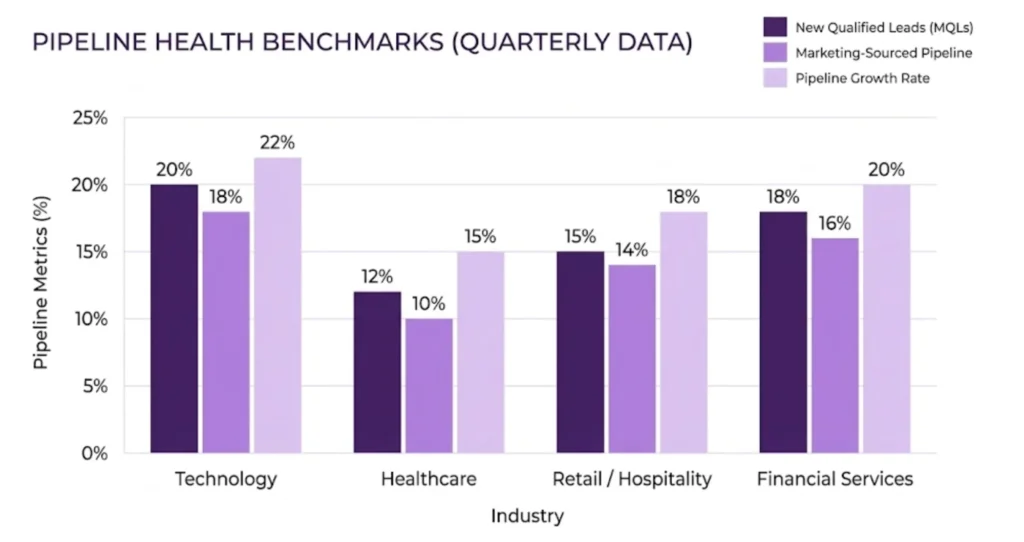
| Pipeline Segment | Avg. PYR | Time to Activation | Maintenance Cost per Candidate/Year |
|---|---|---|---|
| Active Role Pipeline | Varies by role selectivity | Immediate | Minimal (active process cost) |
| Silver Medalist Pool | 18 to 24% | 2 to 8 weeks | $90 to $150 |
| Passive Candidate Pool | 6 to 12% | 3 to 18 months | $40 to $80 |
| Talent Community | 2 to 5% | 6 to 24 months | $20 to $40 |
The maintenance cost per candidate per year reflects the cost of the recruiter attention, content, and platform use required to keep each candidate engaged and their information current. The PYR for each segment must exceed the implied cost of pipeline maintenance relative to the alternative (external sourcing cost) for the investment to be justified.
At typical external sourcing costs of $8,000 to $14,000 per hire, even the silver medalist pool’s maintenance cost of $90 to $150 per candidate per year is recovered by a single hire from a pool of fewer than 100 candidates.
How AI Transforms Candidate Pipeline Management?
Key Strategies for Building and Maintaining a High-Quality Pipeline
Stop Juggling
10 Job Boards.
Search One
Your next role is already here. avua pulls opportunities from across the web into a single searchable feed; filtered by role, location, salary, and remote preference.
1.5 Million+
Active Jobs
380+
Job Categories
Candidate Pipeline and Diversity, Equity, and Inclusion
Pipeline composition is one of the most direct and most frequently overlooked mechanisms through which demographic diversity in hiring is produced or foreclosed.
Sourcing Bias in Pipeline Composition
The demographic composition of the candidate pipeline is determined by the sourcing strategies used to build it. Pipelines built exclusively through LinkedIn InMail, employee referrals, and traditional career fair recruiting tend to replicate the demographic characteristics of the networks these channels reach, which are frequently less diverse than the full qualified candidate population for most roles.
Building a pipeline that is demographically representative of the full qualified pool requires deliberate sourcing diversification: actively reaching communities, platforms, and professional associations that are not part of the default sourcing channel set.
Pipeline Stage Attrition by Demographic Group
Even a demographically diverse initial pipeline can produce homogeneous hire outcomes if specific demographic groups are exiting the pipeline at disproportionate rates at specific stages. Tracking pipeline progression by demographic group at every stage transition, not just at the offer and hire stages, reveals where attrition is occurring and enables stage-specific investigation of the causes.
Assessment criteria that systematically disadvantage specific groups, interview designs that favor particular communication styles, and feedback processes that are applied inconsistently across demographic groups all produce pipeline attrition patterns that are invisible in aggregate diversity reporting but visible in stage-level demographic pipeline analysis.
Pipeline Maintenance Equity
A pipeline that is maintained for some candidate segments and not others effectively provides different levels of organizational attention to different populations. If silver medalists from elite university backgrounds receive proactive nurturing communications while silver medalists from non-target institutions do not, the pipeline is reinforcing the sourcing inequity it was designed to address. Equitable pipeline management applies consistent nurturing investment across all candidate segments regardless of the demographic characteristics of the candidates within them.
Common Challenges and Solutions
| Challenge | Solution |
|---|---|
| Pipeline Depleted After Each Hire | Implement a post-hire pipeline exit process that moves non-selected qualified candidates into the strategic pipeline with appropriate tagging rather than marking them as rejected and forgotten |
| Pipeline Data Quality Degrading Over Time | Implement quarterly data audits; use AI-powered profile enrichment to maintain current contact and career information automatically |
| Difficulty Identifying Relevant Pipeline Candidates Quickly | Invest in semantic search and AI matching capabilities within the CMS; establish a consistent tagging taxonomy that enables multi-dimensional searches |
| Hiring Managers Skeptical of Pipeline Candidates | Present pipeline candidate profiles alongside their prior assessment data to demonstrate the qualification foundation; allow hiring managers to review silver medalist assessments before making sourcing decisions |
| Pipeline Not Reflecting Future Workforce Needs | Connect pipeline management to workforce planning; build pipeline for anticipated roles six to twelve months in advance of anticipated openings |
Real-World Case Studies
Case Study 1: The Engineering Firm
A civil engineering firm with a chronic shortage of licensed structural engineers had been spending an average of 47 days and $18,400 per hire filling senior structural roles through external sourcing. Analysis of their past five years of hiring revealed that in every hiring cycle, three to six candidates had been assessed and found capable but were not selected due to headcount constraints, timing mismatches, or minor role-fit considerations. None had received any post-process communication.
The firm implemented a structured strategic pipeline: all qualified candidates who were not selected entered a silver medalist pool with detailed competency tagging. A quarterly outreach program maintained the relationship with brief project updates and role visibility. When the next two senior structural roles opened simultaneously, a pipeline search returned 8 strong silver medalists. Five responded positively to direct role notifications.
Four completed the expedited assessment process. Three received offers. All three accepted. Average time-to-hire from role opening: 14 days. Average cost per pipeline hire: $3,100. The pipeline had converted six years of sourcing investment that had previously produced nothing but single hires into a reusable talent asset.
Case Study 2: The Technology Scale-Up
A technology company scaling from 80 to 250 employees over 24 months had been treating each hiring cycle as an independent event: building pipeline, filling roles, and allowing the pipeline to dissipate. As hiring pace accelerated, this approach produced progressively longer time-to-fill and higher per-hire costs because each new role was starting from scratch regardless of the sourcing investment made for prior similar roles.
They implemented a persistent pipeline strategy: every role opened by building on the pipeline from the most recent similar role rather than from zero. Silver medalists, pipeline candidates who had not advanced, and candidates who had expressed interest without applying were all tagged, segmented, and maintained between hiring cycles. Within 12 months, 34% of hires were being filled from existing pipeline.
Average time-to-fill reduced from 41 days to 24 days. Cost-per-hire for pipeline-sourced roles averaged $4,800, compared to $16,200 for roles requiring fresh external sourcing. The combined annual savings from pipeline sourcing against external baseline were $418,000.
Case Study 3: The Healthcare System
A healthcare system building a diverse clinical leadership pipeline had invested significantly in sourcing candidates from underrepresented backgrounds through targeted partnerships and community outreach. Despite this sourcing investment, the demographic diversity of its clinical leadership cohort improved only marginally over two years, because the diverse candidates sourced in each cycle were not being retained in the pipeline between cycles.
The system implemented segmented pipeline management with explicit equity tracking: every diverse candidate who entered the clinical leadership pipeline was tagged with their background, their assessed competency profile, and their non-selection reason. A dedicated DEI pipeline segment received tailored nurturing communications featuring diverse clinical leaders from the system, professional development content, and proactive role-match alerts.
Over 18 months, the proportion of clinical leadership hires from underrepresented backgrounds increased from 17% to 29%. The improvement was attributed primarily to pipeline conversion of diverse candidates from prior cycles rather than to increased sourcing activity, demonstrating that the earlier sourcing investment had been producing candidates who were simply not being retained in the pipeline long enough to be hired.
Building a Candidate Pipeline Dashboard: What to Track?
Here’s what you can do in order to get near perfect pipeline made:
Candidate Pipeline Across the Talent Acquisition Lifecycle
Pre-Requisition Pipeline Building
The most strategic phase of pipeline management occurs before a role has been formally opened. Pre-requisition pipeline building, informed by workforce planning data about anticipated future roles, builds candidate relationships, maintains engagement, and ensures that qualified candidates are ready and accessible when the requisition is approved.
Organizations that build pipeline six to twelve months in advance of anticipated hiring needs have a structural advantage in filling those roles faster and at lower cost than those beginning sourcing at the point of requisition approval.
Active Sourcing and Funnel Building
When a role opens, the first pipeline activation step is a search against the existing strategic pipeline for candidates who match the role requirements. Only after the strategic pipeline has been fully searched and the available candidates from within it have been contacted should external sourcing efforts begin. This sequencing, which most organizations get backwards, ensures that the investment in the strategic pipeline is realized before additional external sourcing cost is incurred.
Post-Hire Pipeline Preservation
The most commonly neglected pipeline management moment. When a role is filled, the candidates who were evaluated but not selected should transition from the active role pipeline to the strategic pipeline, not be marked as rejected and forgotten.
A 15-minute post-hire pipeline preservation protocol, tagging each non-selected qualified candidate with their assessment data and routing them to the appropriate strategic pipeline segment, converts the role-specific sourcing investment into a persistent organizational asset.
Pipeline Review and Refresh
A quarterly pipeline review that assesses the health of each strategic pipeline segment against its targets, refreshes stale candidate data, removes candidates who have become unreachable or who have opted out, and identifies the segments that require sourcing investment to rebuild ensures the pipeline remains a living asset rather than an aging database.
The Real Cost of Pipeline Neglect
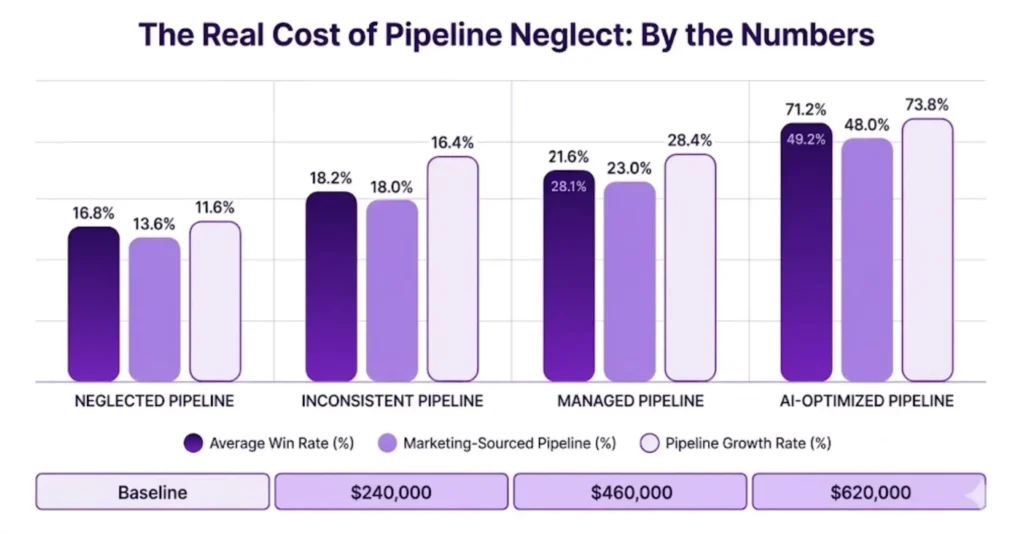
| Pipeline Management Level | Pipeline-to-Hire Rate | Avg. Time-to-Fill | Avg. Cost per Hire | Est. Annual Talent Acquisition Cost (100 hires) |
|---|---|---|---|---|
| No Pipeline (Cold Start Every Role) | 0% pipeline | 34 days | $14,200 | $1,420,000 |
| Passive Pipeline (Minimal Maintenance) | 8% pipeline | 28 days | $11,800 | $1,180,000 |
| Active Pipeline (Structured Maintenance) | 22% pipeline | 21 days | $9,100 | $910,000 |
| AI-Optimized Pipeline (avua) | 34% pipeline | 14 days | $7,200 | $720,000 |
The $700,000 difference in annual talent acquisition cost between no pipeline and an AI-optimized pipeline at 100 hires per year reflects the combined impact of higher pipeline-to-hire rates reducing external sourcing cost, faster time-to-fill reducing vacancy cost (estimated at $800 per day per unfilled role), and lower per-hire cost for pipeline-sourced candidates versus external hires. The cost reduction compounds each year as the pipeline matures and the pipeline-to-hire rate increases.
Related Terms
| Term | Definition |
|---|---|
| Recruiting Funnel | The active evaluation pipeline for a specific current role; the operational subset of the broader candidate pipeline |
| Silver Medalist | A candidate who reached late hiring process stages but was not selected; the highest-priority segment of the strategic pipeline |
| Talent Pool | The accumulated database of candidate profiles; the infrastructure within which the candidate pipeline is maintained |
| Pipeline Yield Rate (PYR) | The proportion of candidates entering the pipeline who result in a hire; the primary pipeline effectiveness metric |
| Passive Candidate | A professional not actively seeking a new role; a primary population in the strategic candidate pipeline |
| Pre-Requisition Sourcing | Proactive pipeline building before a role has been formally opened; the most strategically valuable form of pipeline investment |
Frequently Asked Questions
How large should a candidate pipeline be for a given role?
A practical starting point is five to eight sourced candidates for every anticipated hire, accounting for screening attrition. The strategic pipeline should have enough depth to fill two to three hires per role family without requiring full external sourcing for every role.
Can a pipeline be too large?
Yes. A pipeline with more candidates than the organization can meaningfully engage is just a database with a better name. A well-maintained pool of 500 outperforms a neglected database of 5,000 every time. Quality of maintenance matters more than volume of records.
How does pipeline management differ for high-volume versus specialist roles?
High-volume roles need scale: automated engagement, structured pre-screening, rapid qualification. Specialist roles need depth: personalized engagement, competency tracking, and long-horizon nurturing of a smaller pool. Same principles, very different pace and relationship intensity.
Should candidates in the pipeline be told they are in the pipeline?
Yes. Explicit consent is best practice and increasingly a legal requirement. Candidates who understand why they are receiving communications engage more meaningfully and give the organization a cleaner compliance position under data protection law.
How does AI change the minimum viable pipeline size?
AI enrichment and semantic matching mean smaller pipelines can deliver equivalent sourcing efficiency to larger manual ones. A pool of 80 AI-enriched candidates can outperform a static list of 200, with less data governance burden and better match quality per interaction.
Conclusion
A candidate pipeline is not a database that candidates fall into. It is a relationship infrastructure that organizations build deliberately, maintain consistently, and activate strategically. The organizations that understand this distinction build pipelines that compound in value with every hiring cycle, producing progressively faster, cheaper, and higher-quality hires as the pool deepens and the relationships within it mature.
The organizations that treat the pipeline as a byproduct of active hiring rather than a strategic investment produce databases that grow in size and decline in value, because the candidates in them are aging without maintenance and the relationships within them are atrophying without attention.
In a hiring market where the speed and cost of filling critical roles directly affects organizational performance, the candidate pipeline is one of the most valuable assets the talent acquisition function manages. It does not appear on the balance sheet. It does not have a procurement line item.
But the organizations that have built it know its value precisely, because they can measure the difference between what it costs to fill a role from pipeline and what it costs to fill a role from scratch. That difference, compounded across every role filled, is what a mature candidate pipeline is worth.
Build it before you need it. Maintain it while you do not. Activate it the moment you do.