In today’s competitive job market, simply having the right skills is not enough. Recruiters often receive hundreds, sometimes thousands, of resumes for a single position. To manage this flood of applications, companies increasingly rely on Applicant Tracking Systems (ATS) to screen resumes before they even reach a human recruiter.
While ATS can help streamline hiring, it also poses a challenge for job seekers: if your resume isn’t formatted correctly or doesn’t include the right keywords, it could be rejected before a recruiter ever sees it. That’s where resume analysis becomes critical. By analyzing your resume carefully, you can optimize it to pass ATS filters and increase your chances of landing an interview.
In this blog, we’ll break down how to analyze your resume effectively and provide actionable tips to make your application ATS-friendly. We’ll also explore how tools like avua can simplify this process, providing insights that make your resume stand out.
What is Resume Analysis?
Resume analysis is the process of reviewing and evaluating your resume to ensure it communicates your skills, experience, and achievements clearly and effectively. It focuses on three main areas:
- Content: Are your skills, accomplishments, and experience clearly highlighted?
- Keywords: Does your resume include terms that match the job description and ATS algorithms?
- Formatting: Is your resume structured in a way that ATS can parse easily?
By performing a thorough resume analysis, you can identify gaps, optimize keywords, and make your resume more attractive to both machines and humans.
Why Beating Applicant Tracking Systems Matters
ATS are designed to scan resumes for relevant keywords, skills, and qualifications. They assign a score to each resume based on how closely it matches the job description. Resumes that fall below a certain threshold are automatically rejected, regardless of the applicant’s actual expertise.
Key reasons why beating ATS matters:
- First Filter: ATS often acts as the first line of screening. If your resume isn’t optimized, it may never reach a recruiter.
- Time Efficiency: Recruiters spend less than a minute on initial resume screening. ATS ensures only the most relevant applications are considered.
- Competitive Advantage: Candidates who optimize their resumes for ATS are more likely to progress to the interview stage.
Common ATS Resume Issues
Many job seekers unknowingly make mistakes that reduce their chances of passing ATS. These include:
- Incorrect File Formats: ATS may have trouble parsing PDF files with complex layouts. Word (.docx) is generally safer.
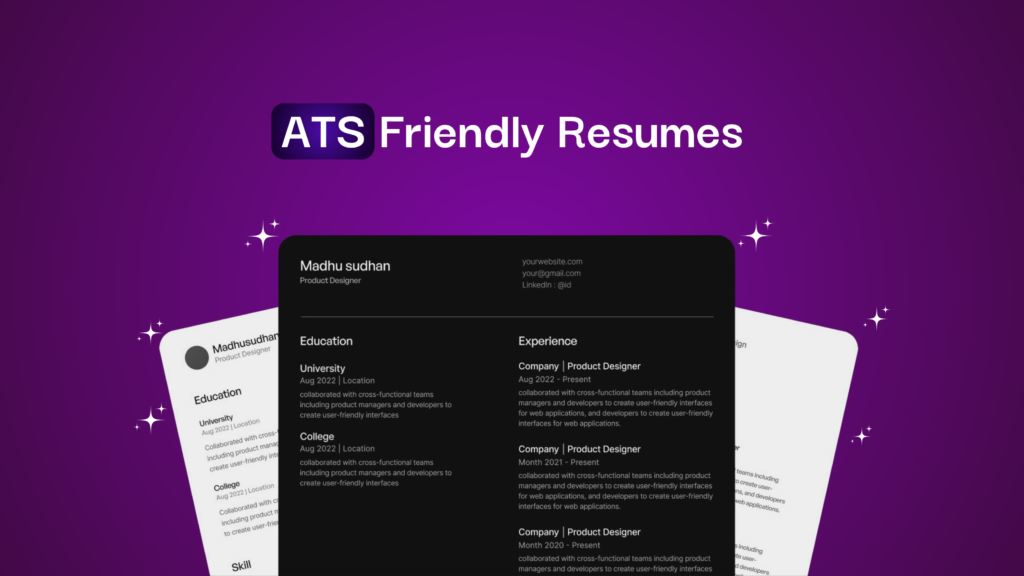
- Complex Formatting: Tables, images, text boxes, and graphics can confuse ATS and prevent proper scanning.
- Missing Keywords: Using generic terms instead of keywords from the job description can lower your ATS score.
- Overuse of Acronyms or Jargon: ATS may not recognize abbreviations unless they are widely accepted in your industry.
- Unclear Section Headers: ATS relies on standard headings like “Work Experience” or “Education” to categorize information.
How to Conduct an Effective Resume Analysis
Conducting a resume analysis doesn’t have to be complicated. Follow these steps to optimize your resume for both ATS and recruiters:
1. Review the Job Description
Start by carefully examining the job posting. Identify the key skills, qualifications, and experience required. Highlight terms that appear repeatedly, as these are likely to be critical keywords for ATS.
Example:
If a role requires “Digital Marketing,” “SEO,” and “Content Strategy,” your resume should include these terms naturally in the experience and skills sections.
2. Check for Keywords
Use the job description as a guide to ensure your resume includes relevant keywords. Avoid stuffing; instead, incorporate them organically into your bullet points, job titles, and summary.
3. Evaluate Formatting
Keep your resume clean, simple, and structured. Use standard fonts, bullet points, and conventional headings. Avoid graphics, tables, and text boxes that may confuse ATS.
4. Quantify Achievements
Include measurable results wherever possible. ATS and recruiters value numbers because they clearly demonstrate impact.
Example:
- “Increased website traffic by 150% through targeted SEO campaigns.”
- “Managed a $2M project budget and delivered 3 months ahead of schedule.”
5. Proofread and Edit
Errors in grammar, spelling, or punctuation can affect both human readability and ATS parsing. Ensure your resume is error-free and polished.
How avua Helps Simplify Resume Analysis
Optimizing your resume for ATS may seem overwhelming, but tools like avua make it simpler:
- ATS Resume Score Checker: avua evaluates your resume against specific job descriptions and provides a score to indicate how likely it is to pass ATS screening.
- Keyword Optimization: avua identifies missing or underused keywords and suggests ways to incorporate them naturally.
- Resume Analysis Reports: The platform generates actionable insights to improve structure, formatting, and content.
By using avua, you can streamline the resume analysis process and ensure your resume is tailored for success. This not only saves time but also increases your chances of getting noticed by recruiters.
Best Practices for ATS-Friendly Resumes
Here are some practical tips to ensure your resume is optimized for ATS:
- Use Standard Headings: Stick to conventional headings like “Professional Experience,” “Education,” and “Skills.”
- Keep Formatting Simple: Avoid tables, graphics, and unusual fonts. Use bullet points for clarity.
- Incorporate Relevant Keywords: Use terms from the job description naturally throughout your resume.
- Focus on Results: Highlight achievements with numbers, percentages, or other measurable outcomes.
- Choose the Right File Type: Word documents (.docx) are typically safer than complex PDFs.
Examples of ATS-Friendly Resume Optimization
Here’s how a standard resume point can be optimized for ATS:
- Before: “Responsible for marketing campaigns and social media.”
- After: “Managed digital marketing campaigns and social media strategy, increasing engagement by 40%.”
Notice how the revised version includes specific keywords like “digital marketing,” “social media,” and measurable results, making it ATS-friendly and more appealing to recruiters.
Advanced Tips for Beating ATS
- Tailor Each Resume: Customize your resume for every application to include the most relevant keywords and skills.
- Include a Skills Section: A dedicated section listing hard skills helps ATS identify your qualifications quickly.
- Use Full Forms and Acronyms: Some ATS recognize only the full term, others only the acronym. Include both if possible.
- Avoid Headers and Footers: Important information in headers/footers may be missed by ATS.
- Focus on Readability: Even if your resume passes ATS, it must also be easily readable by humans. Clarity, formatting, and flow matter.
Also Read: Best CV Headline Examples to Grab Recruiter Attention Instantly
Common Resume Analysis Tools
Apart from avua, several tools can help with resume analysis, but not all provide actionable insights for ATS systems. When selecting a tool, it’s important to focus on features that directly improve how your resume performs during automated screenings, such as:
- Keyword analysis capabilities
- ATS compatibility checks
- Personalized recommendations
- Clear scoring or ranking system
avua stands out because it combines in-depth resume analysis with practical ATS optimization suggestions and an intuitive resume builder, allowing job seekers to not only identify gaps but also make improvements instantly, significantly increasing their chances of landing interviews.
Benefits of Performing Resume Analysis
Conducting a thorough resume analysis provides multiple benefits:
- Increased Interview Opportunities: Optimized resumes are more likely to pass ATS and reach recruiters.
- Better Self-Assessment: You gain clarity on your strengths, weaknesses, and marketable skills.
- Higher Confidence: Knowing your resume is ATS-ready gives you confidence during applications.
- Time Efficiency: Targeted, optimized resumes reduce the time spent applying to multiple jobs.
Final Thoughts
In the modern job market, resume analysis is no longer optional, it’s essential. By understanding how ATS works, optimizing your resume for keywords, and using structured formatting, you can increase your chances of standing out.
Tools like avua resume analysis make this process simpler by offering ATS-friendly suggestions, keyword optimization insights, and practical guidance to refine your resume effectively. With a strategic approach to resume optimization, you can beat ATS, impress recruiters, and move closer to landing your dream job.
Remember, your resume is your first impression. A well-analyzed, ATS-optimized resume not only improves your chances of being shortlisted but also demonstrates professionalism, attention to detail, and a results-driven mindset.
FAQs
Q1. What is the main purpose of resume analysis?
Resume analysis helps identify strengths, weaknesses, and opportunities in your CV to optimize it for both ATS and recruiters.
Q2. How do I make my resume ATS-friendly?
Focus on clean formatting, standard headings, relevant keywords, measurable achievements, and correct file types (.docx is preferred).
Q3. Can a resume pass ATS without keywords?
It is unlikely. ATS relies heavily on keywords to score resumes. Including relevant terms from the job description is critical.
Q4. How can avua help with resume analysis?
avua provides an ATS resume score checker, keyword optimization suggestions, and actionable insights to improve resume structure and content.
Q5. Should I analyze my resume for every job application?
Yes. Tailoring your resume to match the specific job description increases your chances of passing ATS and getting noticed by recruiters.