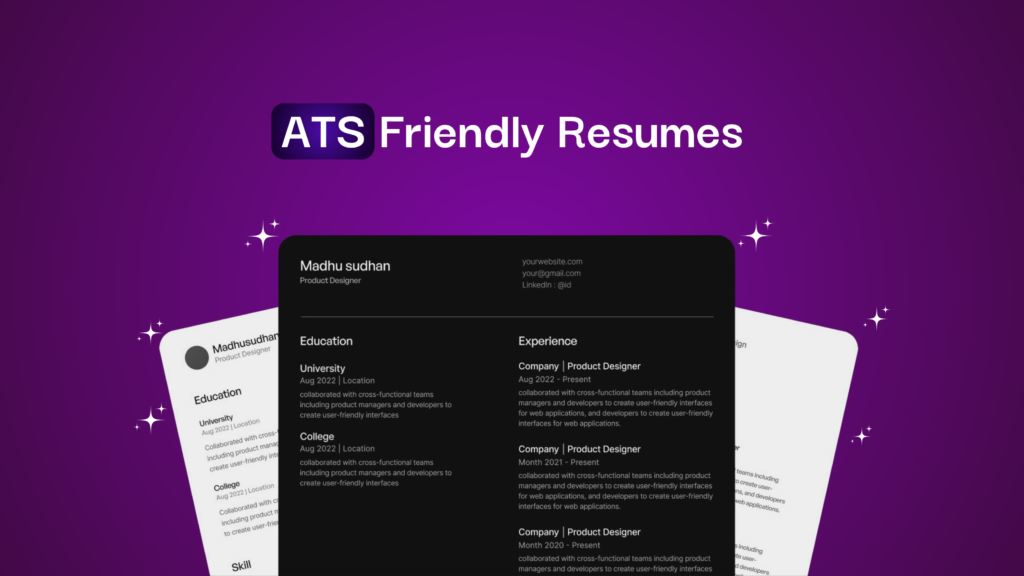
Did you know that 75% of resumes never reach a human eye because of automated filters?
Today’s job market moves at lightning speed, with recruiters spending an average of just six seconds on an initial scan.
Cracking the resume score secret is no longer optional; it is the difference between an instant rejection and a lucrative interview.
Successful candidates now focus on precise keyword alignment and clean formatting to satisfy both bots and hiring managers. This guide breaks down the hidden metrics you need to master today.
The Resume Score Secrets Blueprint
- Algorithmic Alignment: Most companies use software to rank candidates. A top resume score secret involves mirroring the specific phrasing found in the job post to prove you are a match.
- Format Integrity: Fancy graphics often confuse scanners. Stick to clean, standard layouts to ensure every piece of data is read correctly.
- Impact Metrics: Numbers grab attention. Swapping vague duties for hard percentages boosts your credibility and your digital ranking simultaneously.
- Keyword Density: Focus on industry-specific hard skills. Strategic placement of these terms tells the system you possess the exact expertise required for the role.
What is a Resume Score and Why It Matters More Than Ever?
A resume score is a structured evaluation of how well your resume matches a specific job role. It is commonly calculated using automated systems that analyze content, relevance, formatting, and keyword alignment.
According to Harvard Business Review, nearly 98% of Fortune 500 companies use an ATS to filter applications before a recruiter sees them.
This means your resume is judged on compatibility before capability.
A strong resume score doesn’t mean exaggeration or keyword stuffing. It reflects clarity, relevance, and alignment with the job description.
How ATS Systems Actually Read Your Resume?
Contrary to popular belief, ATS software does not “read” resumes like humans. It parses data.
Here’s what most ATS platforms evaluate:
- Job title relevance
- Skills alignment with the role
- Experience context (not just keywords)
- Chronological clarity
- Section labeling consistency
- Education and certifications structure
Systems do not assess creativity or personality. Recruiters do that later.
This is why resumes that look impressive visually sometimes fail ATS checks, while simple, well-structured resumes perform better.
ATS Score: What Recruiters Pay Attention To
Recruiters rarely see the raw ATS score, but they feel its impact. Resumes with higher ATS alignment naturally surface more often in shortlists.
Here’s what indirectly influences your ATS score:
1. Role-Specific Keyword Context
Using relevant terms matters, but context matters more.
For example, “project management” carries more weight when paired with outcomes, tools, or scale.
2. Skill Depth Over Skill Lists
Recruiters prefer resumes that demonstrate usage, not just mention skills.
3. Experience Relevance
According to LinkedIn Talent Solutions, recruiters spend an average of 7.4 seconds scanning a resume once it passes ATS filters.
Your resume must quickly signal relevance.
Resume Checker Tools: Why Candidates Use Them
Modern job seekers increasingly rely on resume checker tools to understand how their resumes perform before applying.
A resume checker typically evaluates:
- ATS compatibility
- Keyword relevance
- Formatting risks
- Missing sections
- Skill gaps based on the role
These tools simulate how automated systems analyze resumes, giving candidates a clearer idea of where they stand.
However, not all resume checker tools provide contextual insights. Some focus only on keyword density, which can mislead users into over-optimizing.
CV Score vs Resume Score: Is There a Difference?
Yes, and understanding this distinction helps candidates applying globally.
- Resume score is commonly used in North America and focuses on concise, role-specific documents.
- CV score is more relevant in regions like Europe, the Middle East, and academia, where longer professional histories are expected.
Despite the format differences, both are evaluated on:
- Structure
- Role relevance
- Skill alignment
- Readability
- Chronology
Recruiters don’t favor length, they favor clarity.
Resume Analysis: What Actually Improves Shortlisting Chances?
Resume analysis done right looks beyond surface-level checks.
Based on recruiter feedback and hiring data, effective resume analysis focuses on:
- Skill-to-role matching, not generic skills
- Achievement framing, using numbers and outcomes
- Clear career progression, avoiding unexplained gaps
- Tool and technology relevance, aligned with industry standards
Formatting Secrets Recruiters Rarely Talk About
Formatting plays a silent but powerful role in resume performance.
Recruiter-friendly resumes usually follow these principles:
- Standard section headings (Experience, Skills, Education)
- Reverse-chronological order
- Simple fonts (Arial, Calibri, Times New Roman)
- No tables or graphics that confuse parsers
- Consistent bullet structure
Many resumes fail ATS checks not because of content, but because the system cannot parse the information correctly.
Long-Tail Keywords: The Hidden Resume Advantage
Most candidates chase high-volume keywords. Smart candidates focus on long-tail keywords that match real job requirements.
For example:
- Instead of “software testing”
- Use “manual testing for enterprise SaaS platforms”
Long-tail keywords:
- Reflect real job tasks
- Reduce competition
- Improve role-specific matching
- Increase resume relevance score
This approach aligns with how modern ATS systems rank candidates.
Why Generic Resumes Lower Your ATS Score?
Sending the same resume to multiple jobs is one of the biggest mistakes candidates make.
Recruiters consistently report that customized resumes outperform generic ones, even when experience levels are similar.
Customization doesn’t mean rewriting everything, it means aligning skills, terminology, and experience emphasis with each role.
Where Job Seekers Go Wrong With Resume Checkers?
While resume checker tools are helpful, misuse can backfire.
Common mistakes include:
- Overloading keywords unnaturally
- Prioritizing score over clarity
- Ignoring human readability
- Chasing 100% scores unnecessarily
Recruiters value balance. A resume that reads naturally and aligns with the role always performs better than one optimized purely for numbers.
How Smart Resume Builders Add Real Value?
Advanced resume platforms today combine resume analysis with role-based insights. Instead of only flagging missing keywords, they help users understand why something matters.
Tools like avua resume builder focus on structural accuracy, role alignment, and readability rather than surface-level scoring. This approach reflects how recruiters actually evaluate resumes, not just how systems parse them.
When paired with contextual feedback, resume analysis becomes a learning tool, not just a pass/fail mechanism.
What’s Resume Score From a Recruiter’s Perspective?
Recruiters don’t look for perfect resumes. They look for:
- Role clarity
- Skill confidence
- Evidence of impact
- Career consistency
A strong resume score simply increases the chance that your resume reaches a recruiter. What gets you hired is relevance and credibility.
Platforms offering deeper CV score insights, such as avua cv analysis, emphasize this balance by focusing on structure, substance, and real-world hiring patterns rather than vanity metrics.
Experience Still Matters But Context Matters More
E-E-A-T signals are increasingly important in hiring:
- Experience: Practical exposure, not just years
- Expertise: Depth in specific skills
- Authoritativeness: Recognized tools, certifications, or leadership roles
- Trustworthiness: Consistency, accuracy, and honesty
Resumes that communicate these elements clearly perform better in both ATS and recruiter reviews.
Resume Scoring Is Not a Shortcut – It’s a Diagnostic Tool
Think of resume scoring as a health check, not a final judgment.
It helps you:
- Identify blind spots
- Understand role expectations
- Improve clarity
- Increase interview probability
Candidates who treat resume analysis as a learning process tend to adapt faster and apply more strategically.
When used correctly, platforms aligned with real hiring logic like avua, can help users bridge the gap between automation and human evaluation without turning resumes into keyword dumps.
Also Read: Rise of AI-Powered CV Analysis – Trending Tools
Final Thoughts: What Recruiters Actually Want
Recruiters want resumes that:
- Match the role clearly
- Show impact, not just responsibility
- Are easy to scan
- Tell a logical career story
A good ATS score opens the door. A well-written resume walks you through it.
Instead of chasing trends blindly, focus on understanding how resume scoring works and how recruiters interpret the results.
That knowledge alone puts you ahead of most applicants.
FAQs on Resume Score Secrets
What is a good ATS score for a resume?
A good ATS score generally falls between 70–85%, but recruiters care more about relevance and clarity than a perfect score.
Are resume checker tools accurate?
They are useful for identifying gaps and formatting issues, but they should not replace human judgment or role-specific customisation.
Does keyword density improve resume score?
Not necessarily. Contextual usage matters more than repetition. Overuse can reduce readability and harm recruiter perception.
Is CV score important for all job markets?
CV score matters more in regions and industries where detailed professional histories are expected, such as academia or Europe.
How often should I analyze my resume?
Ideally, before applying to each role. Even small adjustments based on job descriptions can significantly improve shortlisting chances.