Some industries talk about opportunity. U.S. construction jobs in 2026 are delivering it, project by project, state by state, at a scale that is hard to overstate.
From the interstate highways being torn up and rebuilt across the Midwest to the gleaming mixed-use towers reshaping city skylines, the semiconductor plants rising across the Sun Belt, and the data centers quietly powering the digital economy from coast to coast, someone has to plan, design, manage, and build all of it.
The U.S. construction sector is one of the largest and most diverse employment engines in the country, supporting over 8 million workers and generating hundreds of thousands of new job openings every single year across an extraordinary range of disciplines and career levels.
What makes the current moment particularly compelling is the convergence of forces driving it. Record federal infrastructure investment, a generational wave of retiring workers creating rapid advancement opportunities, and an industry-wide technology transformation rewarding professionals who can blend field experience with digital fluency.
From project managers and structural engineers to quantity surveyors, site supervisors, and construction technology specialists, the breadth of opportunity across the U.S. construction sector in 2026 is unlike anything the industry has seen in recent decades, and the professionals who position themselves effectively are finding that the market rewards them accordingly.
30 Second Snippet: Construction Sector Jobs in the US
The U.S. construction sector is hiring at a pace that few industries can match right now. With over 8 million workers already employed and hundreds of thousands of new roles opening every year across engineering, project management, site supervision, and skilled trades, the opportunities are as broad as the industry itself.
Federal infrastructure investment, a booming commercial development pipeline, and a generational wave of retiring professionals are creating real and immediate career openings at every level. For professionals ready to make their next move, the U.S. construction job market in 2026 is one of the most rewarding and opportunity-rich environments the sector has seen in decades.
Why Consider a Career in the Construction Industry?
Construction is not just about hard hats and heavy machinery. It is a sector that builds the physical foundation of modern life, from highways and bridges to hospitals, office buildings, and power plants. And with infrastructure investment continuing to surge across the U.S., the demand for skilled construction professionals has never been higher.
Growth of Jobs in the Construction Industry
Jobs in the construction industry are growing at a pace that outstrips many other sectors. According to the Bureau of Labor Statistics (BLS), employment in construction and extraction occupations is projected to grow 4% through 2033, adding hundreds of thousands of new positions across the country.
This growth is being driven by a mix of factors. Federal infrastructure spending, the renewable energy boom, population growth in Sun Belt states, and decades of underbuilding in residential housing are all pushing construction companies to hire at scale. The result? Serious job security for anyone entering or already working in this field.
It is also worth noting that skilled labor shortages are widening the gap between available jobs and qualified workers. That means employers are competing harder for good candidates, and wages are reflecting that pressure. The future of the industry belongs to those who build the skills to meet it.
Do Construction Jobs Pay Well?
Short answer: yes, and often better than many white-collar roles that require a four-year degree. Many construction jobs pay well above the national average, especially once you have trade certifications or a few years of hands-on experience. The median annual wage across all construction and extraction occupations sits comfortably above the broader U.S. workforce median. Specialized roles like elevator and escalator installers and construction managers can earn six figures, while skilled trades like plumbers and electricians routinely out-earn college graduates in many states.
Entry-level construction workers typically start between $35,000 and $45,000 annually, but with OSHA certifications, specialized training, and experience, that number climbs quickly. Add union membership or work on large-scale federal projects, and compensation packages become even more competitive.
Ready to find your next construction job?
Avua.com gives you access to a constantly updated pipeline of live job listings across North America and Europe, spanning every level and discipline within the sectors that are hiring hardest right now. Visit Avua.com today, explore live opportunities across your sector, and take the first step toward a career move that actually moves you forward.
Best U.S. Construction Jobs to Pursue: Roles, Responsibilities, and Pay
Here is a detailed look at the most in-demand and best-paying jobs in the construction sector right now. Each role is explored in terms of what the work actually involves, what the median pay looks like, and what it takes to get started.
Construction Managers
What Does a Construction Manager Do?
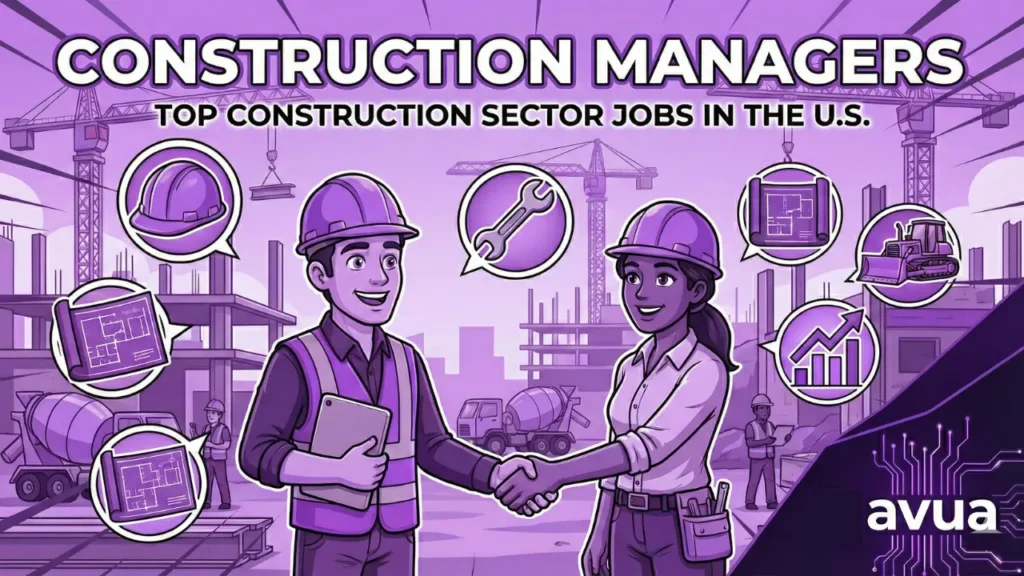
Construction managers are the people who keep every moving part of a construction project on track. They coordinate teams of subcontractors, manage project timelines and budgets, review blueprints, communicate with architects and engineers, and make sure every phase of the build meets safety and code requirements. It is a high-responsibility role that demands strong leadership, sharp organizational skills, and deep knowledge of construction processes.
Construction managers work on everything from residential builds to large commercial developments, government infrastructure projects, and industrial facilities. Some specialize as construction superintendents, overseeing day-to-day field operations, while others take on broader project management responsibilities.
Median Pay and Career Path for Construction Managers
According to the BLS, the median annual wage for construction managers is approximately $104,900. Top earners in high-cost metro areas or on large federal contracts can push well past $150,000.
Most construction managers hold a bachelor’s degree in construction management, civil engineering, or a related field, though many reach the role by working their way up from skilled trade positions. Certifications such as the Project Management Professional (PMP) credential or LEED accreditation can significantly boost both hiring prospects and salary potential.
Electricians
Role of an Electrician in Construction Projects
Electricians install and maintain wiring, lighting, control systems, and electrical panels in every type of construction environment, from single-family homes to commercial high-rises and industrial power plants. The role demands expertise in electrical codes, blueprint reading, and safety compliance as a baseline expectation.
Broadly, electricians fall into three categories: residential, commercial, and industrial. Residential electricians work on homes and apartment buildings. Commercial electricians handle office buildings, retail spaces, and similar structures. Industrial electricians work in manufacturing plants, power generation facilities, and infrastructure systems. Each pathway has its own licensing requirements and pay scales.
Median Pay and Licensing for Electricians
The BLS reports a median annual wage of around $61,590 for electricians, with those in high-demand states and union positions earning considerably more. Industrial electricians and those working on renewable energy construction projects, particularly solar and wind installations, are among the highest-paid in the trade.
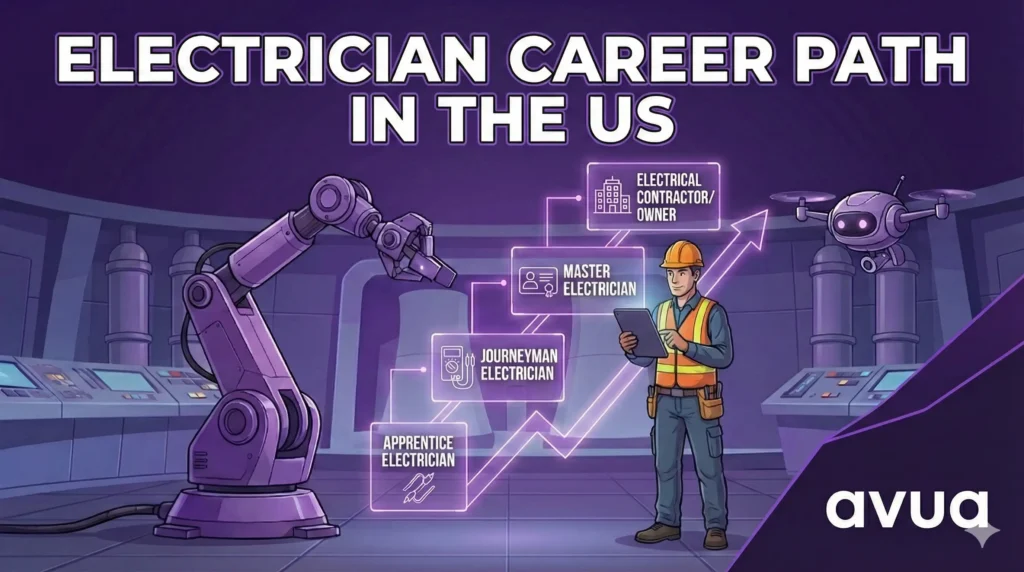
Getting licensed as an electrician typically requires completing an apprenticeship program, which usually runs four to five years and combines paid on-the-job training with classroom instruction. After that, electricians work toward journeyman and eventually master electrician status, each level unlocking higher earning potential.
Plumbers
What Plumbers Do on Construction Sites?
Plumbers install and maintain the pipe systems that carry water, gas, and waste through buildings and infrastructure. On active construction sites, plumbers work alongside other trades to rough in piping systems before walls and ceilings close up, then return for finish work once the structure is complete.
The role also extends to pipefitters, who specialize in industrial piping systems used in manufacturing, oil and gas, and process plants. Pipefitters handle more complex, high-pressure systems and often earn a premium over general plumbers as a result.
Median Pay for Plumbers in the U.S.
Median pay for plumbers sits at approximately $59,880 per year according to the BLS, but experienced master plumbers and pipefitters working on commercial or industrial projects regularly earn over $80,000. States with active residential construction markets and aging infrastructure repair programs tend to offer the strongest demand and pay for plumbers.
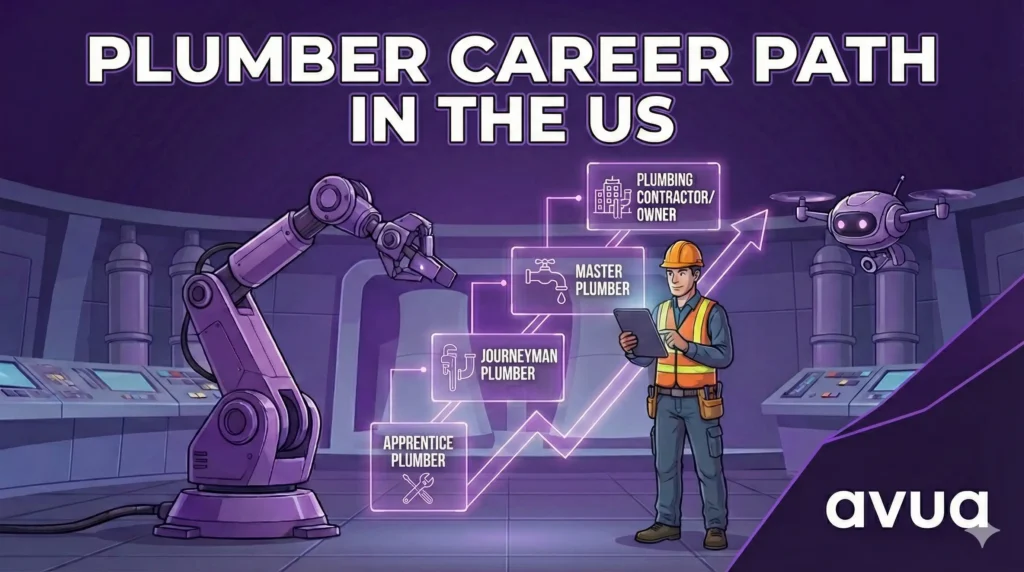
Like electricians, plumbers typically enter the trade through a registered apprenticeship program. A high school diploma is the standard entry requirement, and apprenticeships are available through trade unions, community colleges, and direct employer sponsorships.
Construction and Building Inspectors
What makes avua stand out?
avua is one of the few platforms that combines resume building, AI mock interviews, CV analysis, and a massive job board into a single ecosystem for job seekers. Most of the tools usually have resume building and score tool but here AI mock interviews and 1.5 Million+ Jobs make it stand out of the usual ones.
Get Unlimited Edits and CV Analysis with 5 AI Mock Interviews at $29.99 only
The Role of a Construction and Building Inspector
Construction and building inspectors are the quality-control professionals of the construction industry. Their job is to review plans, visit construction sites, and verify that buildings and infrastructure meet local and national building codes, zoning regulations, and safety standards. Without inspectors, there would be no reliable way to ensure that structures are safe for the people who use them.
Inspectors typically specialize by building type or system. Some focus on structural elements like walls and foundations, others concentrate on electrical systems or plumbing, and others review fire safety compliance. Government agencies employ most inspectors, though private engineering firms and construction companies also hire them.
Median Pay for Construction and Building Inspectors
The BLS places the median annual wage for construction and building inspectors at approximately $67,700, with those in high-demand markets earning significantly more. The role often requires prior construction experience in a specific trade, along with state certification or licensure.
This is one of the construction sector’s more accessible paths to a higher-paying, lower-physical-strain career. Experienced tradespeople who want to transition away from manual labor often find inspection roles to be a strong option, since field knowledge is a core requirement.
Equipment Operators

Types of Equipment Operators in Construction
Heavy equipment operators control the heavy machinery used to construct roads, bridges, buildings, and large-scale infrastructure. The category includes crane operators, bulldozer operators, excavator operators, pile driver operators, and grader operators, among others.
Each type of machinery requires specific training and often its own certification. Crane operators must pass rigorous safety exams and maintain their credentials through regular recertification. Pile driver operators handle the specialized machinery that drives foundation piles deep into the ground for bridges and other structures, a high-skill, in-demand niche within the broader equipment operator category.
Pay and Demand for Equipment Operators
Median pay for heavy equipment operators ranges depending on specialty. Operating engineers and other construction equipment operators earn a median of around $49,100 annually, while crane operators can earn significantly more, with median wages exceeding $60,000. Union membership, particularly through the International Union of Operating Engineers, is common in this trade and can push compensation well above median figures.
Employment growth for equipment operators is solid, driven by infrastructure development, highway construction projects, and the buildout of renewable energy facilities across the country.
Elevator and Escalator Installers

What This Role Involves?
Elevator and escalator installers and repairers are among the highest-earning construction workers in the U.S. The work involves assembling, installing, and maintaining elevator and escalator systems in commercial and residential buildings, which demands a rare combination of mechanical, electrical, and structural knowledge.
These workers interpret blueprints, install guide rails, connect motor systems and control systems, and conduct thorough safety testing before any system goes live. The job is physically demanding and technically complex, and as urban density continues to increase, demand for this specialty is expected to remain strong.
Median Pay for Elevator and Escalator Installers
This is one of the best-paying specialized construction roles in the country. The BLS reports a median annual wage of approximately $97,860 for elevator and escalator installers and repairers. Most workers in this trade enter through a union-affiliated apprenticeship, which typically takes four to five years to complete.
Ironworkers
Ironworkers Install Structural and Reinforcing Iron and Steel
Ironworkers install structural and reinforcing iron and steel to form and support the skeletons of buildings, bridges and other structures, and large infrastructure projects. The work includes reading blueprints, connecting steel beams, placing reinforcing bar (rebar) in concrete forms, and operating rigging equipment to lift and position materials.
There are different specializations within ironworking. Structural ironworkers focus on assembling and installing the steel frameworks and structures of buildings and bridges. Reinforcing ironworkers place rebar and post-tensioning cables in concrete forms. Ornamental ironworkers handle staircases, railings, and decorative metalwork.
Median Pay for Ironworkers
The median annual wage for ironworkers is approximately $57,600 according to the BLS. Structural iron and steel workers on large commercial or infrastructure projects, especially those represented by the Ironworkers union, often earn considerably above that figure. Demand for ironworkers is closely tied to commercial construction and infrastructure investment, both of which remain strong areas of growth.
Drywall and Ceiling Tile Installers
What Drywall and Ceiling Tile Installers Do
Drywall and ceiling tile installers are responsible for the interior finishing stages of a construction project. They install the walls and ceilings that give buildings their finished, livable interiors. This includes cutting and hanging drywall panels, taping and finishing joints, and installing suspended ceiling tile grid systems in commercial spaces.
While this is often considered a general construction trade, experienced drywall finishers who can deliver high-quality results on tight schedules are genuinely sought-after, particularly in high-volume commercial construction markets. The work is physically demanding but does not require the same multi-year apprenticeship as some of the higher-earning trades.
Median Pay for Drywall Installers
The median annual wage for drywall and ceiling tile installers sits around $47,800, with experienced finishers and those working on large commercial projects earning more. It is a solid entry point into the construction sector for those looking to build a career without a long apprenticeship commitment.
Construction Laborers and Helpers
The Foundation of Every Construction Site
Construction laborers and helpers are present on virtually every construction site, performing the essential tasks that keep projects moving. This includes site preparation, material handling, loading and unloading deliveries, operating small equipment, cleaning up work areas, and supporting skilled tradespeople as they complete specialized work.
This role is often the starting point for a construction career. Many skilled tradespeople began as general construction laborers and moved into apprenticeship programs after gaining exposure to the industry. It is also one of the most accessible construction jobs, with most positions requiring only a high school diploma and a willingness to work hard.
Median Pay and Advancement for Construction Laborers
The median annual wage for construction laborers is around $42,100, but the real value of this role lies in what it opens up. Workers who pursue OSHA 10 or OSHA 30 certifications, complete first aid training, and demonstrate reliability and initiative often move quickly into apprenticeship programs and skilled roles with much higher earning potential. It is one of the clearest pathways into the construction industry for people starting from scratch.
How to Find the Best-Paying Construction Jobs in the U.S.?
Knowing which roles pay well is only half the equation. Actually landing those roles requires a clear strategy around skills, certifications, and where you search.
What Skills and Certifications Make You More Hireable?
The construction sector rewards credentials. Here are the most impactful ones to pursue:
OSHA Safety Certifications: OSHA 10 and OSHA 30 certifications signal to employers that you take site safety seriously. They are often required on federally funded projects and many large commercial builds. Getting certified is relatively quick and affordable compared to the career benefit it provides.
Trade Licenses: Most skilled trades require state-level licensing, and requirements vary significantly. Electricians, plumbers, and elevator installers all work within licensing frameworks that govern who can legally perform certain types of work. Holding the right license in your state is non-negotiable for most high-paying construction roles.
Blueprint Reading and CAD Familiarity: The ability to read and interpret construction blueprints is a skill that spans almost every construction role above the laborer level. Familiarity with basic CAD software or digital plan review tools is increasingly valued on modern construction sites.
Project Management Credentials: For those aiming at construction management roles, credentials like the PMP certification or LEED accreditation demonstrate both management capability and knowledge of sustainable construction practices. Both are recognized across the construction and extraction sector and can meaningfully increase earning potential.
First Aid and CPR: A small investment in time that many employers either require or strongly prefer. On active construction sites, having team members who are trained in emergency response has real practical value.
How Avua Helps You Land Jobs in the Construction Industry?
Finding a construction job used to mean sorting through job boards manually, sending applications into the void, and hoping something stuck. Avua changes that. As an AI hiring platform with 1.5 million+ jobs, Avua uses intelligent matching to connect job seekers with construction roles that actually fit their experience, location preferences, and salary expectations.
- AI Job Matching: Instead of browsing through hundreds of irrelevant listings, Avua’s AI analyzes your profile and surfaces the construction roles most likely to be a fit. That means less time searching and more time applying to the right opportunities.
- AI CV Analysis and Resume Score: Upload your resume and get an instant, AI-powered evaluation of how well it matches the types of roles you are targeting. The Resume Score feature highlights gaps and gives you actionable suggestions for improving your application before it reaches a recruiter.
- AI Mock Interviews: Preparing for a construction management interview is different from preparing for an electrician licensing board exam. Avua’s AI Mock Interview tool lets you practice role-specific questions and sharpen your answers in a low-pressure environment before the real thing.
Frequently Asked Questions About Construction Industry Jobs
What Is the Highest-Paying Job in Construction?
Elevator and escalator installers and repairers are among the highest-paying construction workers, with a median annual wage of approximately $97,860. Construction managers are not far behind at around $104,900, though that role typically requires more education or extensive experience. Both roles consistently rank among the top-paying positions in the construction sector.
Are Construction Jobs in Demand in the U.S.?
Yes, strongly so. The construction sector is facing a well-documented shortage of skilled workers, which is driving wages up and making qualified candidates highly sought-after. Infrastructure investment, housing demand, and the growth of renewable energy construction are all contributing to sustained employment growth across the industry.
Can You Build a Long-Term Construction Career Without a Degree?
Absolutely. The majority of the highest-paying trade roles in construction, including electricians, plumbers, ironworkers, and elevator installers, are entered through apprenticeship programs rather than four-year degrees. A high school diploma and the right trade certification can take you significantly further in construction than a general degree in many other fields.
What Is the Median Pay for a Construction Worker in the U.S.?
The median annual wage for general construction laborers and helpers sits at approximately $42,100, but this varies widely by region, experience, and specialization. Skilled tradespeople and management roles earn considerably more, with the construction sector as a whole offering competitive median pay relative to other industries accessible without a college degree.
What Is the Difference Between Construction and Extraction Jobs?
Construction jobs focus on building, assembling, and maintaining structures, infrastructure, and systems. Extraction jobs involve removing natural resources from the earth, such as oil, gas, minerals, and timber. The BLS groups construction and extraction occupations together in its reporting, but the day-to-day work and required skills are quite different. This article focuses specifically on construction roles.
Start Your Construction Career with Avua
The construction industry offers genuine career opportunities at every skill level, from entry-level construction laborers building their first real work experience to seasoned construction managers overseeing multi-million dollar projects. The roles covered in this guide represent some of the most in-demand and best-paying positions in the U.S. right now, and the sector shows no signs of slowing.
If you are ready to take the next step, whether that is finding your first construction job or leveling up to a higher-paying role, Avua gives you the tools to do it smarter. Browse 1.5 million+ job listings, get an AI-powered resume review, and prepare for interviews with AI Mock Interviews, all in one platform built for job seekers who are serious about where they are headed.